Macronutrients are the building blocks of your diet.
Every food you eat is a combination of three macros: protein, fat, and carbohydrates. Understanding how they work together is the key to reaching any fitness goal — whether you want to lose weight, build muscle, or just feel better.
What Are Macronutrients?
Macronutrients ("macros") are nutrients your body needs in large amounts. They provide energy in the form of calories:
- Protein: 4 calories per gram
- Carbohydrates: 4 calories per gram
- Fat: 9 calories per gram
Alcohol is technically a fourth macro (7 calories per gram), but we'll focus on the three essential ones.
Protein: The Builder
What It Does
- Builds and repairs muscle tissue
- Supports immune function
- Produces enzymes and hormones
- Provides structural components for skin, hair, and nails
Best Sources
Animal sources: Chicken, beef, fish, eggs, dairy
Plant sources: Tofu, tempeh, beans, lentils, quinoa, nuts
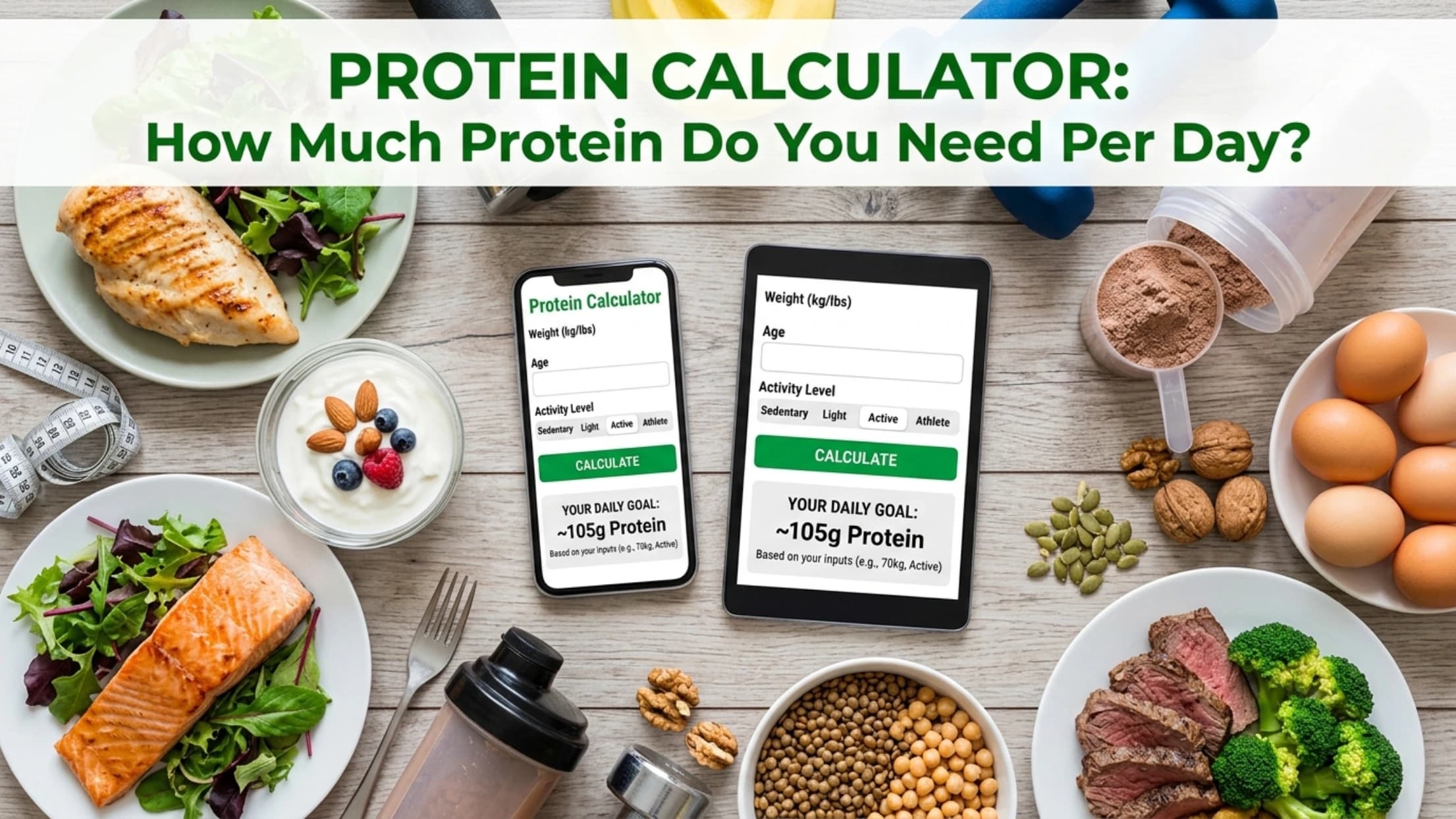
How Much Do You Need?
| Goal | Protein Intake (g/kg body weight) |
|---|---|
| General health | 0.8 - 1.0 |
| Weight loss | 1.6 - 2.2 |
| Muscle building | 1.6 - 2.4 |
| Athletes | 2.0 - 2.7 |
Example: A 70kg person aiming for weight loss needs 112-154g protein daily.
Key Insight
Protein has the highest "thermic effect" — your body burns 20-30% of protein calories just digesting it. For every 100 calories of protein you eat, you effectively get only 70-80 calories.
Carbohydrates: The Energy Source
What They Do
- Primary energy source for muscles and brain
- Spare protein from being used as energy
- Support gut health through fiber
- Replenish glycogen stores for exercise recovery
Types of Carbs
Simple carbs (fast energy): Fruits, honey, sugar, white bread
Complex carbs (sustained energy): Whole grains, oats, beans, vegetables
Fiber (non-digestible): Vegetables, fruits, whole grains, legumes
How Much Do You Need?
Carb needs vary dramatically based on activity level:
| Activity Level | Carb Intake (g/kg body weight) |
|---|---|
| Sedentary | 3 - 5 |
| Light activity | 5 - 7 |
| Moderate activity | 7 - 10 |
| High intensity athletes | 10 - 12 |
Key Insight
For weight loss, many people reduce carbs to 30-40% of total calories. This can help control appetite, but complete elimination (ketogenic diets) requires careful planning and isn't necessary for most people.
Fat: The Essential Nutrient
What It Does
- Essential for hormone production
- Supports brain function and cell health
- Provides long-lasting energy
- Absorbs fat-soluble vitamins (A, D, E, K)
- Maintains skin and hair health
Types of Fat
Saturated fat: Animal products, coconut oil, palm oil
Monounsaturated fat: Olive oil, avocados, nuts
Polyunsaturated fat: Fish, walnuts, flaxseed, chia seeds
Trans fat: Processed foods (avoid completely)
How Much Do You Need?
Fat should make up 20-35% of your total calories. Minimum intake is 0.5-0.8g/kg to support hormone function.
| Goal | Fat Intake (% of calories) |
|---|---|
| General health | 25 - 35% |
| Weight loss | 20 - 30% |
| Low-carb/keto diet | 60 - 75% |
Key Insight
Fat is calorie-dense (9 calories per gram), so portion control matters. But healthy fats from nuts, fish, and olive oil are essential — don't eliminate them completely.
How to Calculate Your Macros
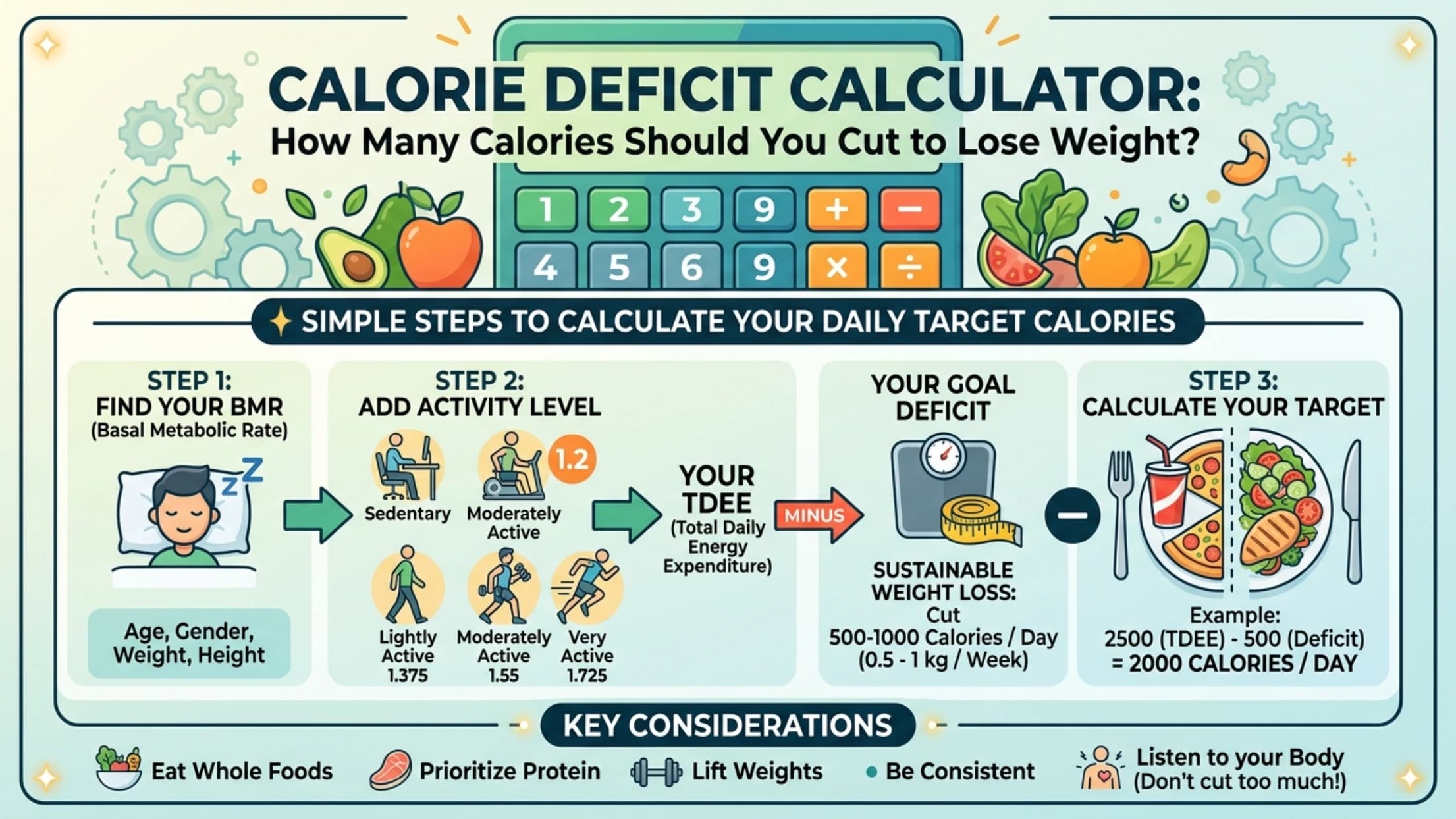
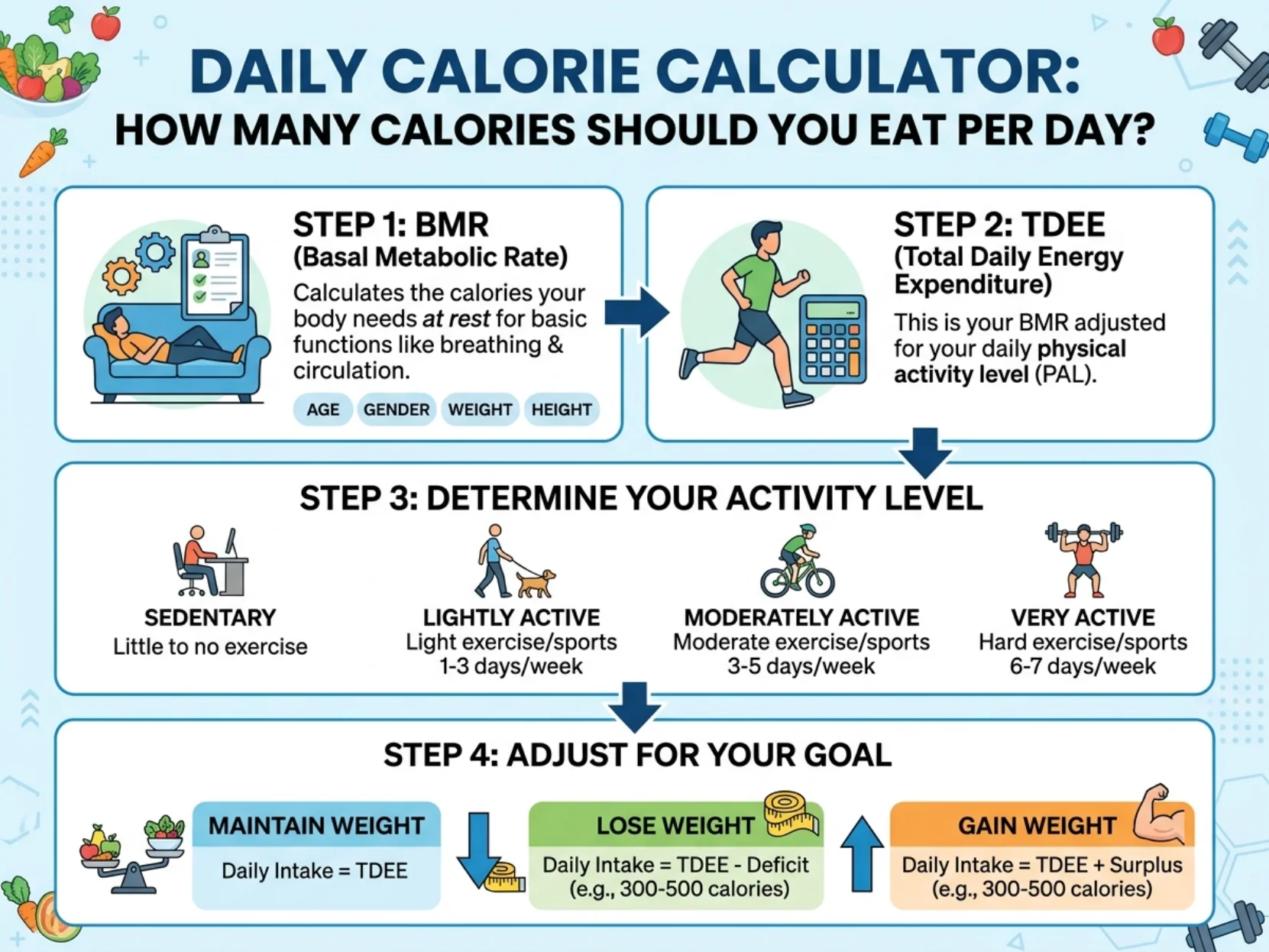
Step 1: Determine Your Calorie Target
Use a calorie calculator or the formula:
- Maintenance calories: Body weight (kg) × 33 (men) or 29 (women) × activity factor (1.2-2.0)
- Weight loss: Subtract 500-750 from maintenance
- Muscle gain: Add 300-500 to maintenance
Step 2: Set Your Protein
Based on your goal (see tables above). This is usually fixed first.
Step 3: Fill Remaining Calories
After setting protein, distribute the rest between carbs and fat:
Example for 1500 calorie weight loss diet:
- Protein: 120g × 4 = 480 calories (32%)
- Fat: 50g × 9 = 450 calories (30%)
- Carbs: 142.5g × 4 = 570 calories (38%)
Macro Ratios for Different Goals
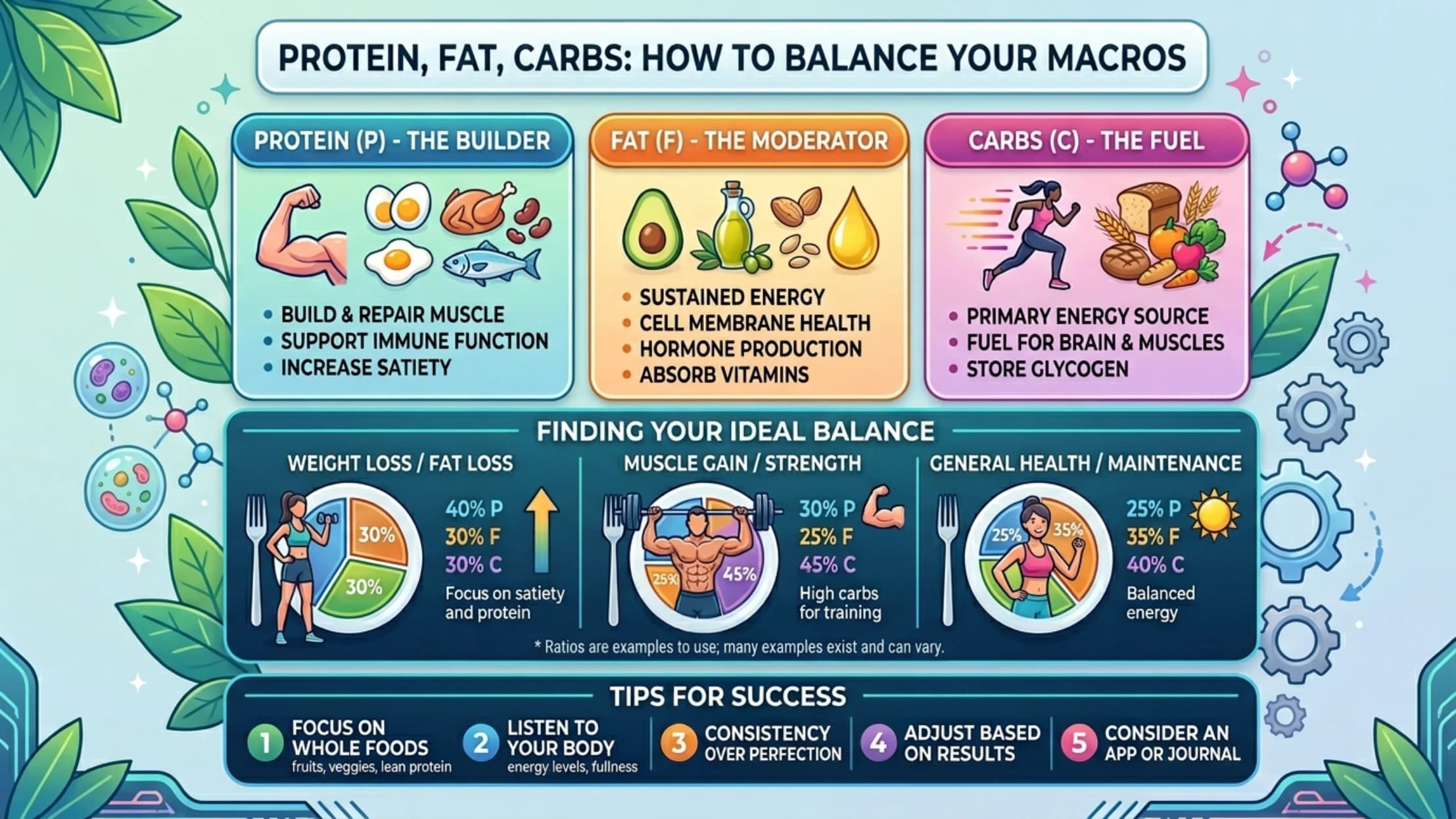
Weight Loss
Recommended: Protein 35-40% | Fat 25-30% | Carbs 30-35%
Higher protein preserves muscle and increases satiety. Moderate carbs provide energy without overeating.
Muscle Building
Recommended: Protein 25-30% | Fat 20-25% | Carbs 45-50%
Higher carbs fuel training intensity. Protein supports muscle repair. Sufficient fat maintains hormones.
General Health
Recommended: Protein 20-25% | Fat 25-30% | Carbs 45-50%
Balanced approach without extremes. Focus on whole food sources.
Common Macro Mistakes
- Obsessing over exact ratios: Being within 5-10% is fine. Consistency beats perfection.
- Ignoring food quality: 100g of protein from chicken ≠ 100g from processed protein bars
- Forgetting fiber: Aim for 25-35g daily, mostly from carbs
- Demonizing any macro: All three are essential. Balance is key.
- Not adjusting over time: Reassess macros every 4-6 weeks based on results
Track Macros effortlessly
Tracking macros by hand is tedious. CalorieAI automates it — snap a photo and instantly see your macro breakdown.
Try CalorieAI free and understand your nutrition without the spreadsheet.