How much protein do you really need?
It's one of the most debated questions in nutrition. Some say 0.8g per kg is enough. Others recommend 2g per kg for muscle building. The truth? Your protein needs depend on your goal, activity level, and body composition.
What Is Protein and Why Does It Matter?
Protein is made of amino acids — the building blocks of your body. Every cell, muscle, enzyme, and hormone requires protein.
Key functions of protein:
- Muscle repair and growth: Essential after exercise
- Enzyme production: Powers digestion and metabolism
- Hormone regulation: Controls appetite, mood, and energy
- Immune function: Antibodies are made of protein
- Satiety: Protein keeps you fuller longer than carbs or fat
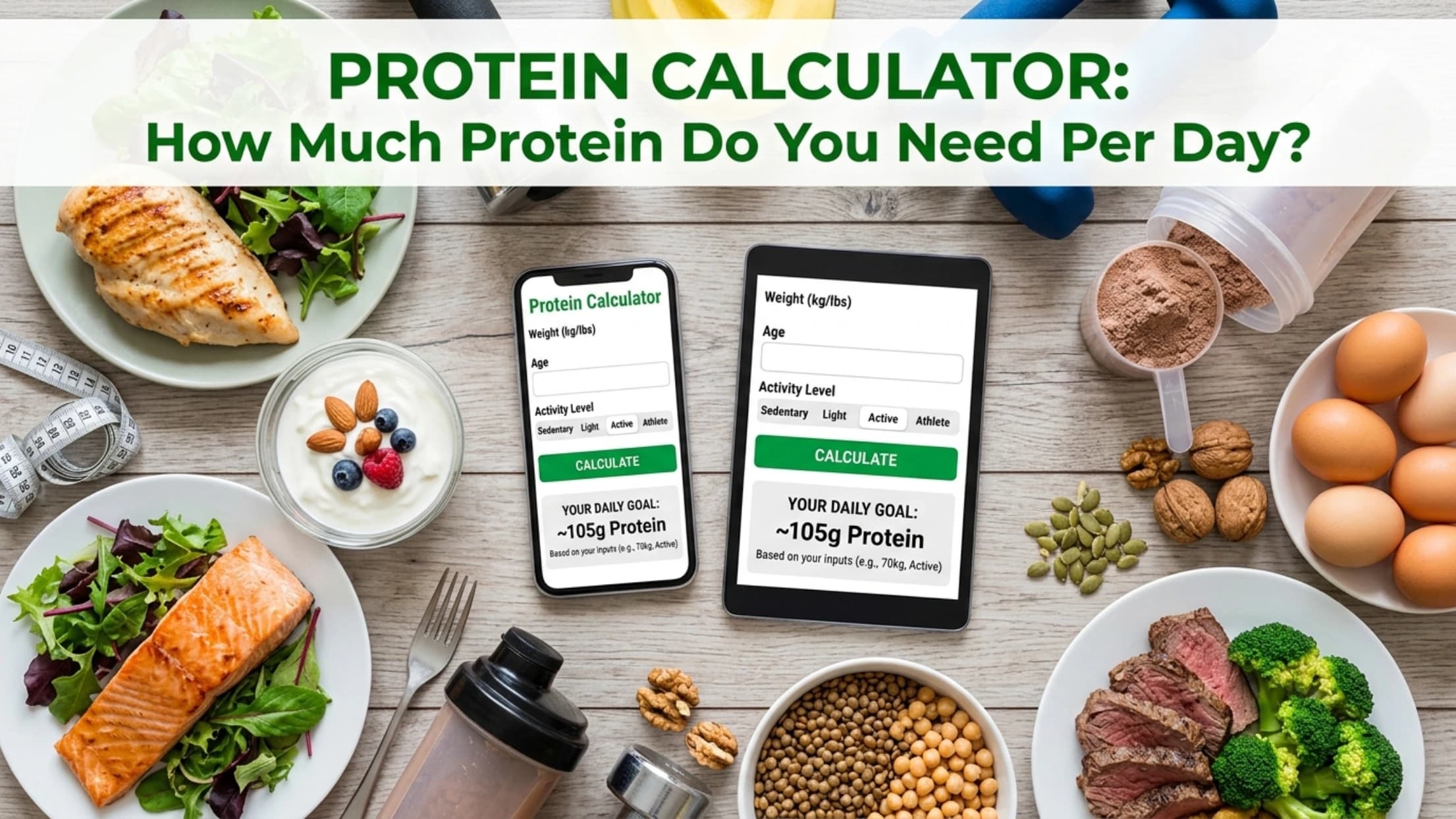
Protein Calculator: Find Your Daily Target
The science-backed formula depends on your goal:
1. For General Health (Minimum Requirement)
The Recommended Dietary Allowance (RDA) is 0.8g per kg bodyweight.
Example: A 70kg person needs 56g protein per day minimum.
This is the absolute minimum to prevent deficiency — not optimal for most people.
2. For Weight Loss (Recommended)
Studies show higher protein helps preserve muscle during weight loss:
1.2-1.6g per kg bodyweight
Example: A 70kg person aiming for weight loss should eat 84-112g protein daily.
Why More Protein for Weight Loss?
- Preserves muscle: When you cut calories, your body burns muscle for energy if protein is low
- Increases thermic effect: Protein burns 20-30% of its calories just to digest (vs. 5-10% for carbs)
- Reduces hunger: Protein suppresses ghrelin (hunger hormone) better than carbs
- Prevents metabolic slowdown: High protein keeps your metabolism firing
3. For Muscle Building and Athletes
Research from the International Society of Sports Nutrition recommends:
1.6-2.2g per kg bodyweight
Example: A 70kg athlete should eat 112-154g protein daily.
When to Go Higher (2.2-2.5g per kg)
- Cutting phase: Athletes losing weight while maintaining muscle
- High-intensity training: Multiple sessions per day
- Vegetarians/vegans: Plant protein has lower bioavailability
- Older adults: Age reduces protein absorption efficiency
Protein Target Quick Reference Table
| Goal | Protein per kg | Example (70kg person) |
|---|---|---|
| General Health (RDA) | 0.8g | 56g/day |
| Sedentary, Maintaining | 1.0g | 70g/day |
| Weight Loss | 1.2-1.6g | 84-112g/day |
| Moderate Activity | 1.4-1.8g | 98-126g/day |
| Muscle Building | 1.6-2.2g | 112-154g/day |
| Intense Training/Cutting | 2.2-2.5g | 154-175g/day |
| Older Adults (65+) | 1.2-1.5g | 84-105g/day |
Protein Per Meal: Optimal Distribution
Recent research shows spreading protein across meals is more effective than loading it all at once:
- Per meal target: 20-40g protein per meal
- Muscle protein synthesis: Peaks at ~30g per meal, then plateaus
- Meals per day: 3-4 meals with adequate protein
Example Daily Protein Distribution (120g total)
- Breakfast: 30g (eggs, Greek yogurt, protein shake)
- Lunch: 35g (chicken breast, tofu, fish)
- Snack: 20g (protein bar, cottage cheese)
- Dinner: 35g (lean beef, salmon, legumes)
High-Protein Food List
Here are the best protein sources by category:
Animal Sources (Complete Protein)
| Food | Protein (per 100g) | Calories |
|---|---|---|
| Chicken Breast | 31g | 165 |
| Turkey Breast | 29g | 135 |
| Lean Beef (90% lean) | 26g | 176 |
| Salmon | 25g | 208 |
| Tuna (canned) | 29g | 132 |
| Eggs | 13g (per 2 eggs) | 155 |
| Greek Yogurt | 10g (per 100g) | 59 |
| Cottage Cheese | 11g | 98 |
Plant Sources
| Food | Protein (per 100g) | Notes |
|---|---|---|
| Tofu | 8-15g | Varies by firmness |
| Tempeh | 19g | Complete protein |
| Lentils | 9g | Also high fiber |
| Chickpeas | 8g | Versatile |
| Black Beans | 8g | Good for muscle |
| Quinoa | 4g | Complete protein grain |
| Almonds | 21g | Also high fat |
| Peanut Butter | 25g | Calorie-dense |
Protein Supplements
- Whey protein: 20-25g per scoop, fast-absorbing, ideal post-workout
- Casein protein: Slow-absorbing, good for overnight recovery
- Plant protein powder: 15-25g per scoop (pea, rice, hemp blend)
Common Protein Myths Debunked
Myth #1: "Your Body Can Only Use 30g Protein Per Meal"
False. Your body absorbs nearly all protein you eat. The 30g limit refers to muscle protein synthesis — beyond that, extra protein is used for other functions (enzymes, hormones, energy), not wasted.
Myth #2: "High Protein Damages Kidneys"
False for healthy people. Studies show no kidney damage from high protein in individuals with normal kidney function. If you have existing kidney disease, consult your doctor before increasing protein.
Myth #3: "Plant Protein Is Incomplete"
Partially true but not a problem. Most plant proteins lack some amino acids, but eating variety (grains + legumes) provides complete protein. You don't need to combine them in the same meal — just eat diverse sources throughout the day.
Signs You're Not Getting Enough Protein
- Constant hunger: Protein deficiency increases cravings
- Muscle weakness: Difficulty building or maintaining strength
- Slow recovery: Taking longer to heal from workouts or injuries
- Hair, skin, nail issues: Protein is essential for collagen production
- Frequent illness: Weak immune function
- Edema (swelling): Fluid retention from protein deficiency
Track Your Protein Intake with AI
Knowing your protein target is step one. Tracking accurately is step two.
CalorieAI makes protein tracking effortless:
- Photo recognition: Snap a picture, get protein count instantly
- Daily dashboard: See protein intake vs. your goal
- Meal suggestions: AI recommends high-protein options
- Macro balance: Track protein, carbs, and fat together
Get CalorieAI Pro — unlimited tracking, personalized protein targets, and detailed nutrition reports.
Try free today — no credit card required.