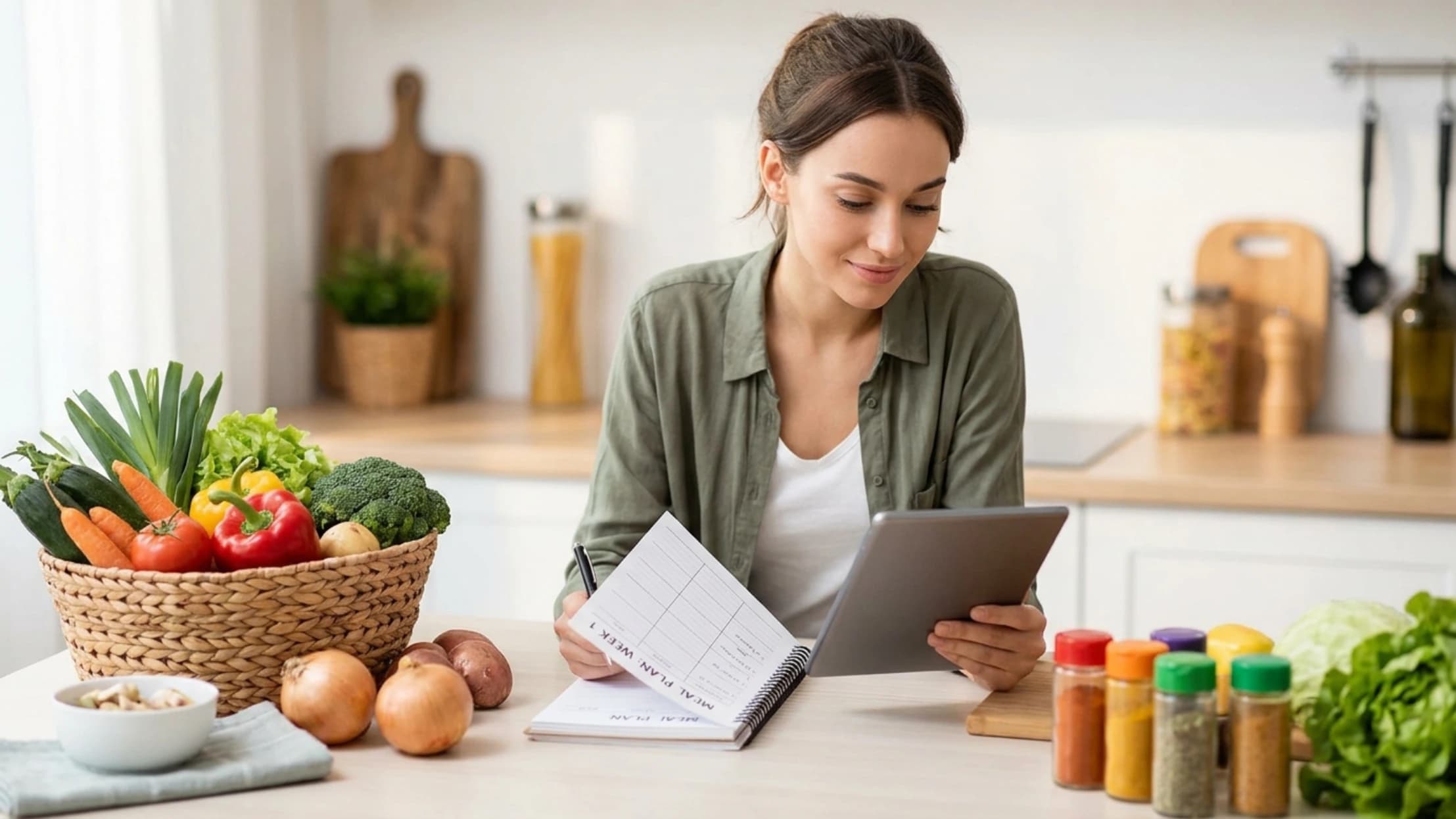
2 hours on Sunday = 10-minute meals all week.
That's the power of meal prep. Instead of cooking every day or relying on takeout, you batch-prepare healthy meals in one efficient session. The result? Better nutrition, less stress, and significant money savings.
Why Meal Prep Works
Research shows people who meal prep are:
- 50% more likely to eat vegetables daily
- 28% more likely to maintain weight loss
- Save $150+ per month compared to eating out
- Reduce decision fatigue — no more "what should I eat?" every meal
The key is making meal prep sustainable, not overwhelming. This guide shows you how.
3 Meal Prep Strategies
Choose the approach that fits your lifestyle:
Strategy 1: Full Batch Prep (Weekend Warrior)
Best for: People with consistent schedules, time on weekends
Prepare complete meals for Monday-Friday in one 2-3 hour session:
- Cook 3 different recipes (one for lunch, two for dinner rotation)
- Portion into containers
- Refrigerate or freeze
Pros: Zero weekday cooking, maximum convenience
Cons: Requires freezer space, limited variety during the week
Strategy 2: Component Prep (Flex Builder)
Best for: People who want variety, flexible schedules
Prepare individual components instead of complete meals:
- Proteins: Grilled chicken, baked salmon, scrambled eggs
- Carbs: Rice, quinoa, roasted potatoes
- Vegetables: Stir-fried mix, roasted broccoli, steamed greens
- Sauces: Prep 2-3 different flavors for variety
Mix and match components each meal for variety.
Pros: More variety, customize each meal, less boring
Cons: Requires some assembly each meal
Strategy 3: Hybrid Prep (Balanced Approach)
Best for: Most people — compromise between convenience and variety
Combine both strategies:
- Sunday: Prep proteins + carbs (base components)
- Wednesday: Prep fresh vegetables + 1 new sauce
- Daily: 5-minute assembly or quick stir-fry
Pros: Balance of convenience and freshness
Cons: Two prep sessions per week
Step-by-Step: Your First Meal Prep
Step 1: Plan Your Menu (10 minutes)
Choose 3-5 meals for the week. Start simple:
- Breakfast: Overnight oats or egg muffins
- Lunch: Grain bowl with protein + vegetables
- Dinner: Stir-fry or sheet-pan meal
Tip: Choose recipes with similar ingredients to minimize shopping.
Step 2: Make Your Shopping List (5 minutes)
Check what you already have, then list what's needed:
| Category | Sample Items | Quantity (for 5 days) |
|---|---|---|
| Proteins | Chicken breast, eggs, tofu | 1kg chicken, 12 eggs, 300g tofu |
| Carbs | Rice, oats, quinoa | 500g rice, 500g oats, 200g quinoa |
| Vegetables | Broccoli, peppers, spinach | 2 heads broccoli, 6 peppers, 500g spinach |
| Sauces/Spices | Soy sauce, olive oil, garlic | Check pantry first |
| Containers | Glass or BPA-free plastic | 10-15 containers |
Step 3: Shop Efficiently (30-45 minutes)
Shopping tips:
- Buy in bulk: Rice, oats, frozen vegetables are cheaper
- Choose versatile ingredients: Chicken works in stir-fry, salad, and bowls
- Check sales: Plan meals around discounted proteins
- Avoid perishables: Skip pre-cut vegetables (they spoil faster)
Step 4: Prep Session (2 hours)
Efficient workflow:
- Start with long-cooking items: Rice, oven-roasted items (30-45 min)
- While those cook: Wash and chop vegetables
- Next: Cook proteins (stir-fry, grill, or bake)
- Last: Assemble and portion into containers
- Cool completely: Before refrigerating (prevents bacteria growth)
Tip: Use multiple burners and oven simultaneously for efficiency.
Sample Weekly Menu (1500 Calories/Day)
Breakfast (5 days)
Overnight Oats Base:
- 200g rolled oats
- 500ml Greek yogurt or milk
- 100g chia seeds
- Mix, divide into 5 jars, add different toppings daily
Daily toppings: Berries (Mon), banana (Tue), apple (Wed), nuts (Thu), cinnamon (Fri)
Calories: ~300 per serving | Protein: 12-15g
Lunch (5 days)
Chicken Quinoa Bowls:
- Base: 500g quinoa cooked (100g per bowl)
- Protein: 1kg grilled chicken breast (150g per bowl)
- Veggies: Roasted broccoli + peppers (150g per bowl)
- Sauce options: Teriyaki, tzatziki, or salsa
Calories: ~400 per bowl | Protein: 35g
Dinner (5 days)
Option A: Stir-Fry Rotation (3 days)
- Protein: Tofu or leftover chicken
- Veggies: Mixed stir-fry vegetables
- Carb: Brown rice (prepped Sunday)
- Different sauce each day: Kung Pao, black bean, garlic
Calories: ~350 | Protein: 20-25g
Option B: Sheet-Pan Salmon (2 days)
- Protein: Baked salmon (150g per serving)
- Veggies: Roasted asparagus + potatoes
- Cook fresh on Tuesday/Thursday (30 min oven)
Calories: ~450 | Protein: 30g
Storage and Safety
How Long Does Meal Prep Last?
| Storage Method | Duration | Best For |
|---|---|---|
| Refrigerator | 3-5 days | Mon-Wed meals, salads, proteins |
| Freezer | 2-3 months | Thu-Fri meals, soups, casseroles |
| Room temperature | 2 hours max | During transport only |
Safety Rules
- Cool completely: Before refrigerating (prevents moisture and bacteria)
- Separate raw and cooked: Never reuse containers for raw meat without washing
- Label with date: Know when each container was made
- Reheat properly: 165°F (74°C) internal temperature
- Trust your senses: If it smells off, throw it out
Meal Prep Mistakes to Avoid
- Over-prepping: Start with 3 days, not 7 — avoid burnout
- Too much variety: 3 recipes maximum for beginners
- Skipping seasoning: Undercooked food tastes bland — season generously
- Wrong containers: Use glass or high-quality BPA-free plastic
- Forgetting snacks: Prep fruit, nuts, or protein bars too
- No backup plan: Keep frozen backup meals for busy weeks
Track Your Prep with CalorieAI
After meal prep, snap a photo of each container to log calories instantly. CalorieAI recognizes batch-cooked meals and saves them for quick logging all week.
Try CalorieAI free — make meal prep tracking effortless.